

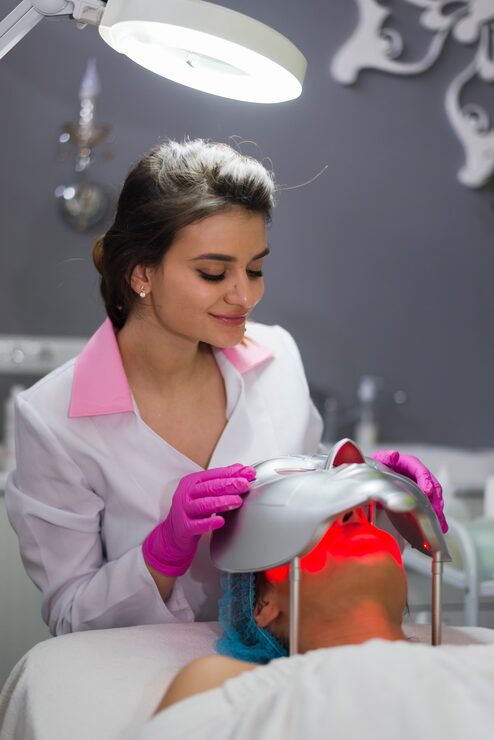
Quick Answer: Red light therapy uses low-wavelength red and near-infrared light to stimulate cellular activity in skin and tissue. The evidence is genuinely solid for a handful of specific uses, like wound healing and mild skin aging, and much thinner for the broader anti-inflammatory and pain-relief claims often attached to at-home devices.
How It’s Supposed to Work
The theory behind red light therapy centers on mitochondria, the energy-producing structures inside cells. Certain wavelengths of red and near-infrared light are thought to be absorbed by components inside the mitochondria, potentially boosting the cell’s energy production and triggering a cascade of downstream effects, including increased collagen production and reduced inflammation in some studies.
Where the Research Is Genuinely Strong
- Wound healing: red light therapy has one of its most established evidence bases here, with multiple clinical studies showing it can speed healing in certain types of wounds, including some diabetic ulcers, under professional supervision.
- Mild-to-moderate skin aging: several controlled trials have found measurable improvements in fine lines and skin texture with consistent use over a period of months, using devices delivering the studied wavelength and dose.
- Certain inflammatory skin conditions: some evidence supports its use for conditions like mild psoriasis, though it’s generally used alongside other treatments rather than as a standalone therapy.
Where the Evidence Is Much Weaker
Claims about red light therapy providing significant pain relief for conditions like arthritis or chronic back pain are based on smaller, more mixed studies, and results vary considerably depending on the specific wavelength, dose, and treatment duration used. Broader claims about boosting metabolism, improving thyroid function, or general “detoxification” don’t currently have strong clinical evidence behind them, despite showing up regularly in marketing for consumer devices.
Why Device Quality Matters So Much Here
Much of the positive research uses professional-grade devices delivering specific, carefully calibrated wavelengths and doses, and there’s real uncertainty about whether cheaper consumer devices deliver comparable results. A device that doesn’t specify its exact wavelength and power output makes it difficult to know whether it’s actually capable of replicating what the studied devices achieved.
What a Reasonable Approach Looks Like
For skin texture or minor wound support, consistent use of a well-specified device over several months, with realistic expectations about modest rather than dramatic results, aligns with what the research actually supports. For pain conditions or anything more serious, red light therapy is more reasonably viewed as a possible complement to established treatment than a replacement for it.
For a broader look at the current research, the National Center for Biotechnology Information’s PubMed database is a useful independent resource for reading the underlying studies.